A Late-Summer Market Basket Built Around What Is Ripe
Plan a late-summer market basket around ripe produce, then add a few flexible ingredients for meals that fit your region and the week ahead.
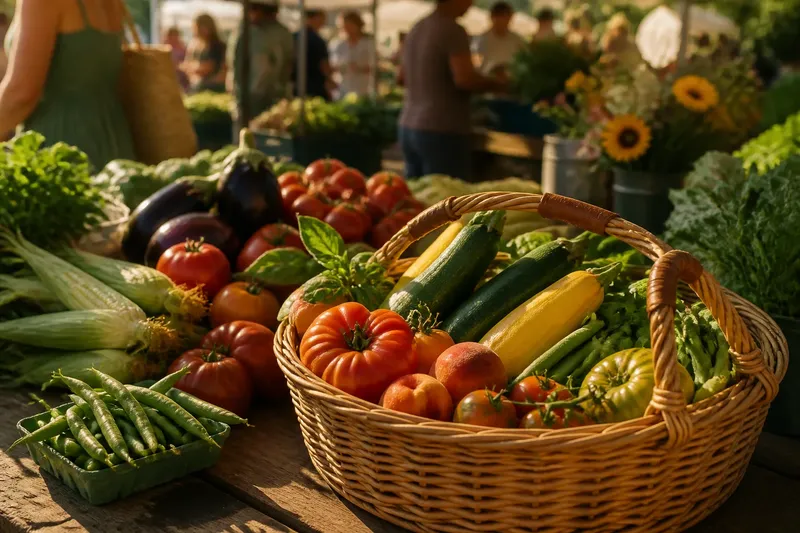
What should you buy at a late-summer market when the harvest changes from town to town? Build your late-summer market basket around what looks ripe at the stalls, then choose a few supporting ingredients that can follow those choices into meals. The point is not to reproduce a fixed seasonal menu; it is to let the produce in front of you shape a manageable week.
Start with a short list, not a fixed menu
Before you leave home, check your fridge, fruit bowl, and pantry. Note what needs using and how many meals you expect to make. A short list might say “something for salads, something to cook, fruit for snacks” rather than naming specific vegetables. That leaves room to respond to the harvest without bringing home more than you can use.
Late summer can bring tomatoes, peppers, eggplant, cucumbers, corn, beans, stone fruit, or other crops, depending on weather, growing conditions, and the market’s suppliers. Treat those as possibilities, not promises. A rainy stretch, a cool spell, or a different growing region can change what is ready.
Bring a reusable bag and, if useful, a smaller container for delicate fruit. Leave enough space to keep soft produce from being crushed under heavier items. If you are shopping with a particular meal in mind, keep the recipe flexible: choose its main vegetable at the market, then adjust the details at home.
Read the stalls for signs of ripeness
Look before you buy. Notice which produce appears in several stalls, which items are being offered in generous piles, and what the sellers are actively replenishing. Those clues can suggest what is plentiful at that market, though they do not establish where it was grown or how it was produced. Ask the vendor about harvest timing or the best way to use an unfamiliar item.
Use your senses in ways that suit the food. A ripe peach often smells fragrant and yields slightly to gentle pressure; a tomato should feel substantial for its size and have an appealing aroma near the stem. Leafy greens should look lively rather than limp, while eggplant is usually chosen for firm, unblemished skin. These are practical cues, not rigid tests: varieties differ, and some produce ripens after purchase.
Buy only what you can store and eat while it is at its best. If an item is new to you, start with enough for one meal rather than filling the basket with it. For produce that is sold by weight, ask to see the amount before it is bagged if you are unsure how much you will use.
Choose a few ingredients that work across meals
Once you have selected the produce, add a compact set of ingredients that can support different combinations. Olive oil, lemons, garlic, onions, plain yogurt, eggs, beans, rice, bread, or pasta can turn vegetables and fruit into meals without requiring a separate specialty ingredient for each dish. Pick according to your household’s preferences and what is already in the kitchen.
Think in roles rather than recipes. One sturdy vegetable can be roasted or sautéed; a tender one can go into a salad or be added near the end of cooking. A grain or bread makes a meal more substantial, while a bright dressing, herbs, or a spoonful of yogurt can give leftovers a different feel. You do not need to buy every supporting ingredient—the pantry may already cover most of the work.
Say you find ripe tomatoes, firm zucchini, and fragrant peaches, but no appealing eggplant. You could take the tomatoes and zucchini, add chickpeas and bread from home, and plan a simple cooked vegetable dish with a tomato salad; the peaches can be eaten fresh or served with yogurt. The expected result is a small set of meals shaped by the actual stall selection, not a shopping list that assumes a particular crop is available.
Give the week a loose rhythm
On market day, separate the produce that is ready to eat from items that may benefit from a little more time. Keep delicate greens and ripe fruit where they are easy to see, so they are less likely to be forgotten. Store each item in a way that suits it; some vegetables keep better chilled, while certain tomatoes and stone fruit can lose appeal if refrigerated before they are ripe.
Early in the week, use the most tender or already-ripe items. Make a salad, slice fruit for breakfast, or cook greens while they are still fresh. As the week moves on, turn sturdier vegetables into a skillet meal, soup, or a tray of roasted produce. Keep a portion plain if you want it to work in more than one meal.
Before the next shop, check what remains and plan around it. A handful of vegetables can become an omelet filling, a grain bowl, or an addition to soup. If your plans change, freeze or cook suitable produce rather than buying more to match an abandoned menu. Follow the product label, the grower’s handling advice, and local food-safety guidance where those instructions apply.
What should you ask and adjust at the market?
How can I tell what is in season here?
Look for produce appearing across several stalls and ask sellers what is coming in from nearby growers now. A regional seasonal calendar can help you recognize likely crops, but the market’s current selection is the more useful guide for that visit.
What if the produce I planned to buy is missing?
Keep the meal’s role and change the ingredient: use another vegetable for roasting, a different fruit for dessert, or greens in place of a planned salad vegetable. If no close substitute appeals, choose a simpler meal from what is available and what you already have.
How much should I buy for the week?
Base the amount on the meals you expect to prepare, the number of people eating, and the space available for storage. When the crop is unfamiliar or especially ripe, buy a modest amount first and decide later whether it belongs on your regular list.
Can a late-summer basket include stored or greenhouse produce?
Yes. A market basket can include food grown under cover or held in storage; seasonality is a way to notice timing and availability, not a rule that disqualifies every other source. Ask how an item was grown or stored if that detail matters to your choices.
Let availability set the menu’s direction
A useful late-summer market basket is specific to the place and day where you shop. Begin with produce that looks ready, add only a few ingredients that can support several meals, and leave room for a substitution. That approach makes seasonal planning adaptable: the harvest can change, while your routine—look, choose, store, and use—still works.
On your next visit, note one item you bought because it was especially abundant and one meal you made with it. That small record can help you recognize what your own market tends to offer as the season shifts, without turning a flexible basket into a rigid rule.