Before the Supermarket: How the Orange Found a Wider Market
Trace how oranges moved from growing regions into inland markets, and learn to read the transport, handling, and retail links behind their wider availability.
How did an orange grown far from your town reach a local market? The orange’s wider market depended on more than ships: orchards, port workers, carriers, wholesalers, and shopkeepers all had to connect. The history is clearest when we follow those links without assuming that access changed at the same pace everywhere.
Oranges traveled only where growing and trade conditions aligned
Citrus cultivation depends on local growing conditions, so communities without suitable sites could not rely on nearby harvests. In those places, access depended on trade: fruit had to leave a growing district and reach buyers while still saleable. The route’s practicality depended on distance, handling, and the connections available in a particular place and period.
Protected gardens could support citrus trees outside suitable outdoor conditions, but growing a small collection differs from producing fruit for a market. A garden could demonstrate horticultural skill without supplying enough oranges for broad trade. Keeping those purposes separate helps explain why the presence of a citrus tree did not necessarily mean local shoppers could buy its fruit routinely.
There is no single timeline that describes every region’s access. A place near a productive orchard or a busy port faced different conditions from a settlement that depended on several transfers. Without evidence tied to a named place and period, it is more accurate to describe the routes and constraints than to assign one date to the orange’s arrival as an everyday purchase.
Ports connected orchards to longer routes
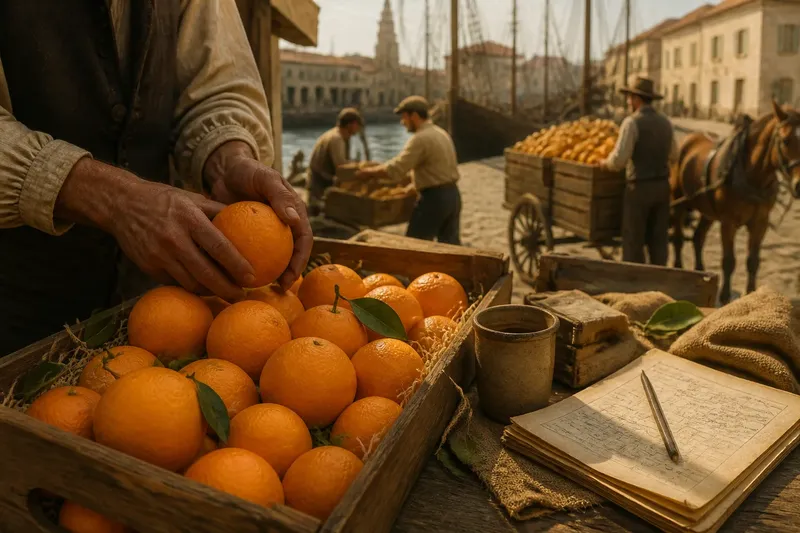
Trading networks carried many goods, and citrus could travel within them rather than requiring a route devoted only to fruit. Produce first had to move from growing districts to a port or other trading center. After a sea journey, another set of carriers had to move it toward inland markets.
A port gathered cargo and linked it with ships, but it was one handoff in a longer chain. Roads, carts, boats, storage rooms, and market workers all shaped what could travel onward. A route mattered only if its links worked well enough for merchants to risk sending perishable goods.
Imagine an invented coastal market where oranges arrive from a named inland district, Pine Ridge, but a rough road delays carts and bruises fruit. A merchant could respond by ordering a smaller consignment that local sellers can move promptly; the observable result would be limited arrivals rather than a steady supply. If the merchant instead arranges a more direct cart transfer and careful loading, the expected result would be fewer damaged oranges at the market and a more dependable opportunity to order again. This scenario illustrates a route decision, not a claim about a documented historical shipment.
Trade connections shaped who could buy oranges
Access depended on the strength of local commercial links. A port city could receive cargo directly, while an inland settlement needed additional transport and distribution. Even when fruit reached a town, it was not automatically within reach of every household: buyers still needed a nearby seller and terms they could accept.
It is tempting to describe oranges as a luxury in one era and an everyday food in another, but that broad story can conceal local differences. Where citrus could not be grown nearby, availability depended on the routes and markets serving that particular community. Without a named place and period, treat claims about changing status as questions to investigate rather than universal stages.
Demand also influenced what merchants chose to carry. When sellers expected buyers, they had a reason to make room for oranges; when demand was uncertain, they could favor other cargo. The result was not a single turning point but a series of decisions shaped by local supply, risk, and retail access.
Handling determined whether distant fruit arrived saleable
Oranges had to withstand packing, loading, travel, transfers, and waiting before sale. Careful handling and suitable storage could help, but they did not remove the limits of time and condition. A route that looked open on a map might still be impractical if fruit was delayed or damaged along the way.
When tracing a shipment, look beyond the place of origin. Ask where cargo changed hands, how it moved between transport modes, and where it waited before reaching a seller. Those details help explain why two markets connected to the same growing district might have different access.
Retail turned arrivals into local access
Wholesalers and market traders divided incoming cargo into quantities that local sellers could handle. Shopkeepers and market vendors then brought fruit closer to households. A shipment’s arrival at a port or warehouse did not by itself mean shoppers could find oranges nearby.
Retail networks shaped access alongside long-distance transport. A town could receive fruit but still leave some residents far from a market or without a seller they could use. The distinction is simple: arrival means the fruit reached a place in the chain; access means buyers could find it through local shops or markets.
Supermarkets later made many supply links less visible to shoppers, but they did not create the basic chain. The same questions remain useful: where was the fruit grown, how did it reach the selling region, and which local businesses carried it to the shelf?
Questions readers ask about the orange’s wider market?
Why was it difficult to buy oranges far from growing regions?
Where citrus could not be grown nearby, fruit depended on transport and trade links. Delays, damage, and weak local distribution could make supply uncertain even when a distant source was available.
Did ships alone bring oranges to inland markets?
No. Ships were one part of the route; road or water transport, port labor, storage, wholesalers, and local sellers handled the remaining links. A problem at any handoff could limit what reached shoppers.
Why did access differ between nearby communities?
Communities could have different connections to ports, roads, markets, and sellers. A town’s position in the trade network influenced whether fruit arrived and whether local buyers could find it.
When did oranges become an everyday purchase?
There is no single date that applies everywhere. To answer for a specific place, look for local evidence about trade, transport, retail, and household buying rather than assuming one shared timeline.
Trace a modern orange with specific clues
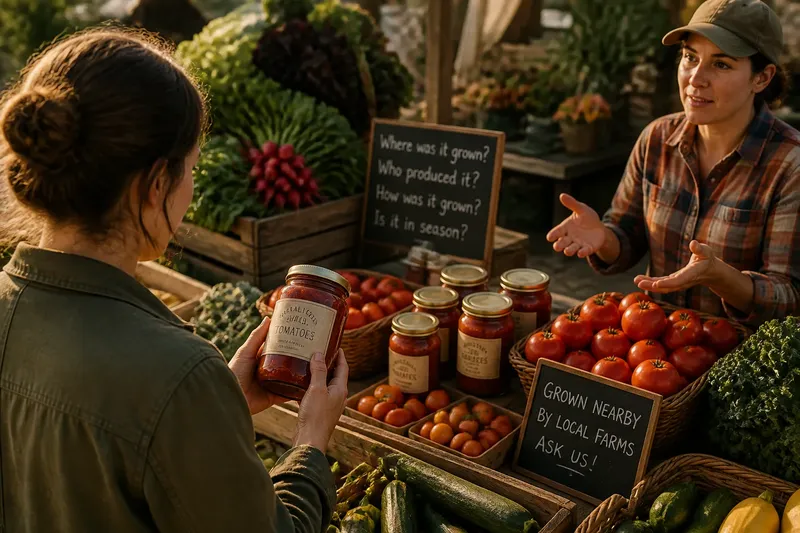
A produce label can identify a growing region, while a package, case label, or store sign may name an importer, packer, or distributor. These clues rarely reveal every transfer, but they can give you a verifiable starting point. Ask a produce manager or consult the retailer’s product information when the label leaves the route unclear.
Use the clues to make a careful decision about what you can and cannot establish:
- If the label names a growing region, record that origin; if it names only a country, treat the exact district as unknown rather than guessing.
- If a carton identifies a packer or distributor, note that company as a documented link; if no company appears, do not invent an intermediary.
- If the store sign names a country but not a grower, treat the country as the available origin information; if the label gives more detail, compare the two for consistency.
- If the produce manager can identify the wholesaler, record the wholesaler as a confirmed local link; if not, leave that part of the route unresolved.
- If the retailer provides transport or sourcing details, use them as evidence for that stated stage; if it provides none, describe the route only as far as the available information supports.
- If another product from the same region is on display, compare its label for shared origin wording; if the wording differs, keep the products’ routes separate rather than assuming they traveled together.
Say you find an invented store label reading “Valencia, Spain,” with a carton naming “Costa Pack Cooperative” and no distributor listed. You can record Valencia as the stated growing origin and Costa Pack Cooperative as a named packing or supply link, but you cannot identify the importer or transport route from those details alone. If the produce manager then confirms that Harbor Foods is the store’s wholesaler, add Harbor Foods as a confirmed local link; if the manager cannot confirm it, leave that link open. The result is a partial route with clear boundaries, not a complete shipment history.
For anyone asking how the orange found a wider market, the useful answer lies in connected stages rather than a single invention: cultivation made fruit available, trade moved it, handling preserved its saleable condition, and retail brought it to buyers. When a label gives only part of that story, identifying the missing links is more reliable than filling them in with a guess.