Fresh Herbs: Choose a Bunch, Pot, or Frozen Pack
Choose fresh herbs in a bunch, pot, or frozen pack based on the recipe, storage space, and amount you need, with less waste and better-fitting flavor.
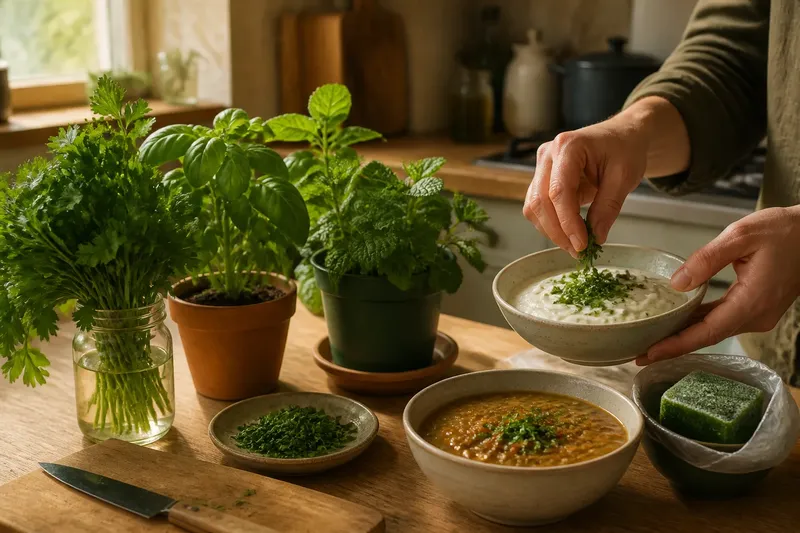
Which fresh herbs should you buy for tonight’s meal: a cut bunch, a living pot, or a frozen pack? Choose based on the recipe’s texture, how much herb it needs, and whether you’ll use the rest soon.
A cut bunch suits recipes that need plenty of fresh leaves
Buy a bunch for dishes that use herbs generously: parsley folded through a salad, cilantro scattered over tacos, or dill mixed into a dip. It is ready to wash and chop, with no plant to care for or frozen portion to separate.
Inspect the leaves and stems before buying. Look for reasonably crisp, green leaves and cut ends that are not slimy or badly crushed. Gently turn the bunch to check below any band or tie. A tired bunch may still work in a cooked dish, but choose fresher-looking leaves when they will sit visibly on top.
At home, remove tight wrapping and damaged leaves. For parsley or cilantro, trim the stems and stand them in a glass with a little water, keeping the leaves above the waterline. Loosely cover with a produce bag and refrigerate. Basil is often better kept at room temperature in water, away from direct sunlight and heat. If a glass is impractical, wrap the bunch loosely in a barely damp paper towel and place it in a container. Avoid sealing wet leaves tightly, since trapped moisture can make them limp or spotted.
A bunch can be wasteful when a recipe needs only a teaspoon. Plan a second use for the rest, such as adding parsley stems to beans or chopping cilantro into another meal. If no second use seems likely, a smaller amount in another form may fit better.
A living pot works for small harvests across several meals
A potted herb can suit someone who often adds mint to tea, chives to eggs, or basil to a meal. You can snip a little at a time rather than opening a larger bundle all at once.
Judge the pot as a plant, not just a package of leaves. Look for sturdy stems and healthy-looking foliage, and check that the soil is not waterlogged. See whether the container has drainage holes and whether you have a bright, suitable place for it. A crowded supermarket pot may still provide leaves, but its container and growing conditions can limit how long it remains productive.
Harvest from different parts of the plant instead of stripping one side bare. With basil, pinch above a pair of leaves to encourage branching. With chives, cut a few blades near the base. Mint spreads readily, so a pot can be easier to manage than planting it directly in a garden bed.
A living pot needs light, water, and attention. A warm, dry kitchen can dry the soil quickly, and the plant takes up space. If you cook with herbs only occasionally, a pot may decline before you use enough leaves to make it worthwhile. It also may not supply the large quantity a recipe needs all at once.
Frozen herbs fit cooked dishes and measured portions
Frozen herbs can help when you want a portion ready without washing and chopping a fresh bunch. Packs may contain plain chopped herbs or herbs frozen with oil or another ingredient. Read the ingredient list and portion directions to see what the product adds to your dish.
Freezing softens the leaves. Once thawed, they usually lack the crisp appearance of fresh herbs, so they suit soups, sauces, stews, scrambled eggs, and cooked vegetables better than a garnish. If a recipe depends on distinct leaves scattered over the finished plate, choose a bunch or snip from a pot instead.
Take only what you need and return the pack to the freezer promptly, following its storage directions. If the herbs are frozen in a block, use a clean spoon or knife to separate a portion when the packaging allows it. Avoid thawing the whole pack just to use a little. An oil-based product may also add fat that the recipe did not otherwise include.
Match fresh herb formats to the recipe’s job
Before buying, decide what the herb does in the dish. Is it a main ingredient, a flavor that simmers, or a finishing touch? The herb’s role often matters more than its name.
- For a raw-herb salad: If the recipe needs a generous amount of leaves that hold their shape, choose a fresh bunch; if you only need a small accent, use a pot if you have one.
- For a soup or sauce that simmers: If the recipe can use soft leaves, choose a frozen portion; otherwise, use fresh herbs or stems you already have.
- For a small garnish: If you need only a few leaves, snip them from a suitable pot; if you have no pot, buy a bunch only if you can use the remainder.
- For a dip or spread: If visible fresh flavor matters, choose a bunch; if softer texture is acceptable, use frozen herbs and check whether the pack includes oil.
- For a dish cooked briefly: If you want the herbs to stay distinct, add fresh leaves near the end; if they will blend into the food, a frozen portion can work.
- For a recipe that uses stems: If the recipe calls for tender stems as well as leaves, inspect the bunch for usable stems; if it needs leaves only, avoid counting tough stems as part of the amount.
Say you plan to make lentil soup and a small yogurt dip. Imagine you have parsley in the refrigerator, but need mint for the soup and rarely cook with mint. First, check whether the parsley leaves are still fresh; if so, chop some into the dip, and if not, choose another fresh garnish or omit it. Next, check the frozen-food section for a plain mint product; if it is available and its ingredients suit the soup, add a portion during cooking, but if the pack is oil-based and you want to avoid extra oil, use fresh mint instead. The expected result is a fresh-looking dip and soft mint flavor in the soup, without buying a whole mint bunch for one use.
Compare quantity, storage, and preparation before buying
Price alone does not determine which form fits. Consider how much usable herb you need, how much preparation you want to do, and whether you have a realistic plan for leftovers.
- Recipe quantity: Check the amount the recipe calls for. If it needs a generous handful, choose a bunch or enough plants; if it needs only a little, consider a pot or frozen portion.
- Usable parts: Check whether the recipe uses stems as well as leaves. If it does, choose a bunch with suitable stems; if it calls for tender leaves only, set aside tough stems for another use or discard them.
- Storage space: Check for room in the refrigerator, on a bright surface, or in the freezer. If the matching storage spot is unavailable, choose another format that fits the space you have.
- Preparation time: Check whether you are willing to rinse, dry, strip, and chop the herbs. If not, choose a portioned frozen product; if texture matters, allow time to prepare fresh herbs.
- Second use: Check whether another meal can use leftover herbs. If you can name a likely dish, a bunch may make sense; if you cannot, buy a smaller amount or choose another format.
- Pack ingredients: Check the frozen product’s ingredient list and portion directions. If it is plain and fits the dish, use it as directed; if it contains oil or seasoning you do not want, select another product or a fresh form.
A quick check at the shelf can prevent buying a large bunch for one spoonful. Think about the next meal you are likely to cook, rather than relying on an ambitious plan to remember the extra herbs later.
Which fresh herb format fits your situation?
Can frozen herbs replace fresh herbs in any recipe?
Frozen herbs work in many cooked dishes, but their softer texture makes them a poor match for a garnish or recipe that depends on crisp leaves. Check whether the pack is plain or includes oil, then choose it only if those ingredients suit the dish.
Which herbs can I keep in a pot?
Basil, mint, chives, and parsley are common potted choices, but each needs suitable light and watering. Check the plant’s growing instructions and your available space; if the conditions do not fit, choose a bunch or frozen herbs instead.
How should I store a cut bunch of herbs?
Remove damaged leaves and avoid leaving the bunch in excess moisture. Parsley and cilantro can often be kept with trimmed stems in a little water, while basil is generally better at room temperature than in a cold refrigerator.
When should I add herbs to a cooked dish?
Add sturdy herbs earlier when you want their flavor to blend into a simmering dish. Add delicate leaves near the end for a distinct fresh note, and use them as a garnish only when their texture and appearance suit the plate.
Follow the product label and the herb’s growing or storage instructions when they differ from general kitchen practice.
Choose the form that suits the meal you will actually make
A bunch offers ready fresh leaves for generous use, a pot supplies small harvests over time, and a frozen pack gives you portions for cooking with less chopping. The best fit depends on the dish, the amount you need, and how you plan to store or use what remains.
For fresh herbs, decide from the dish outward: identify the herb’s role, estimate the usable amount, then check your storage and leftover plans. That quick decision helps you buy a form that contributes to dinner instead of becoming an unwanted extra.